
Rediscovering Nature: The “Re-Connecting with Nature” Educational Project
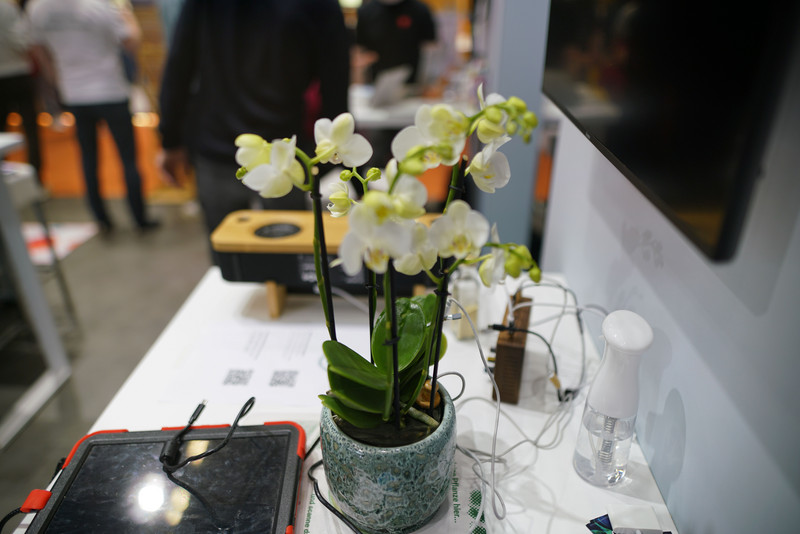
The teaching and learning materials developed by the Austrian association Friendship with Nature in collaboration with educational media specialists invite students to explore the natural world with all their senses. At the heart of Re-Connecting with Nature is the idea of not merely explaining nature theoretically in the classroom, but making it tangible as a living presence. The “music” of plants offers an unusual starting point for this. It becomes audible when biological rhythms are translated into sound sequences using a small device. When a plant reacts to light, shade, or other environmental conditions, the musical expression changes as well.
Wonder opens the door to questions
The lasting inspiration that young people can gain from such astonishing observations was also the subject of a presentation by the initiative’s founder, Univ.-Prof. Dr. Maximilian Moser, at didacta. For students, plants no longer appear merely as objects of observation, but as living organisms. Previous school projects by the association have shown that such moments of surprise and wonder can have a special impact: they open the door to questions and independent exploration, for example regarding biodiversity, ecological relationships, or the relationship between humans and the environment. “Today, it is becoming increasingly clear that our highly technicized and profit-driven approach to the Earth is reaching its limits,” says SAGST project manager Gunter Keller. “This is precisely why young people need experiences that foster a new appreciation for living things. Projects like ‘Re-Connecting with Nature’ can help develop a broader understanding of nature.”
Interdisciplinary Resources
A comprehensive reader supports interested teachers in their preparation, and they can also borrow a wide variety of equipment for the described experiments. The project’s website also offers free interdisciplinary teaching materials for various grade levels. In mathematics, for example, fractals in the plant world can be explored, while in ethics or social studies, the question of whether plants have rights and what responsibility humans bear toward ecosystems is discussed. The content is developed by educators and scientists in collaboration with Klett MEX, an educational communications agency within the Klett Group. Klett MEX has already implemented numerous innovative school projects, including the “Inspiration Biene” initiative, which is funded by SAGST.