
Neighborhood Network: Community Care in the Landsberg District
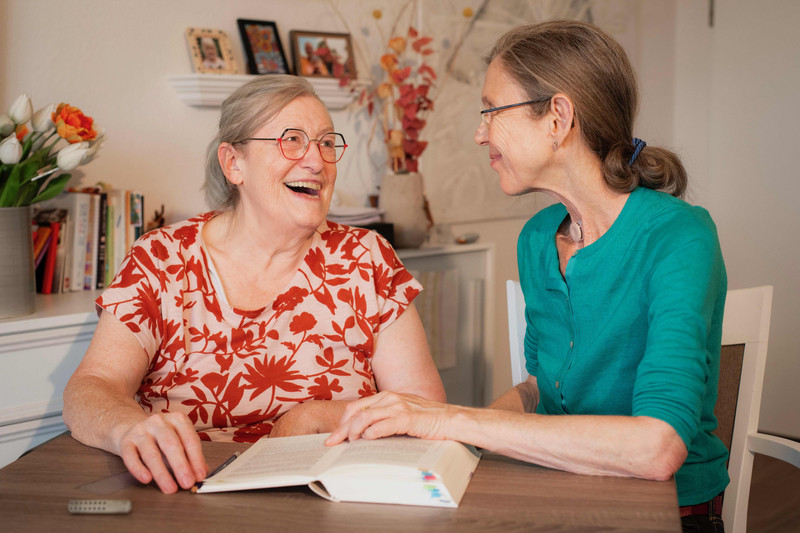
The shortage of skilled nursing care workers poses major challenges for municipalities throughout Germany. Even today, the vast majority of care is provided by family members—often under great strain. At the same time, many older adults wish to remain in their own homes and familiar surroundings for as long as possible. The “QuartierPflege” initiative in the Landsberg am Lech district, funded by the Software AG Foundation (SAGST), addresses this need.
Since the project launched in 2025, 16 so-called “care communities” have already been established in several municipalities: networks in which volunteers serve as “care guides” to support older adults and those in need of care in their homes, receiving an expense allowance funded by the long-term care insurance fund. They help with daily tasks, accompany people to appointments, or take on household chores and simple caregiving tasks. In doing so, they work closely with professional care services, which can then focus on medical treatment and care.
Strengthening a Sense of Community
The concept builds on the experiences of a pilot project in Leipzig, which SAGST helped facilitate from 2021 to 2023. There, a coordinated neighborhood network was established in two city districts, complementing professional care while simultaneously revitalizing the sense of community in the neighborhood. Experience shows that, when well-organized, this type of support can strengthen basic care services. It also opens the door to new forms of volunteer engagement that better fit the realities of many people’s lives than traditional volunteer models.
This approach is now being further developed in the Landsberg district. Following a successful launch in the municipality of Erpfting, Egling an der Paar, Vilgertshofen, and Scheuring followed suit; other municipalities plan to join as well. Furthermore, measures are planned to promote activity and social interaction, such as “chat benches” as well as sports and mobility facilities.
Creating Sustainable Structures
“An important aspect of the project is its local roots,” explains SAGST project manager Christian Wüst. “Together with the district administration and local care services, we are creating sustainable structures that can have a long-term impact.” In this way, social innovation is combined with a very practical goal: to provide even better support to people in need of care in their daily lives and to make the care system as a whole more sustainable. The experiences from the first year of operation are currently being evaluated and incorporated into the Gesellschaft für Gemeinsinn’s toolkit so that they can also be used at other locations and in other neighborhoods.
-