
Inclusive Housing for Seniors: A Model Project for the Wesermarsch Region
What began in 1989 as an initiative by a handful of idealists has now become an integral part of the village of Ovelgönne (Wesermarsch district, Lower Saxony). The Lebensräume Ovelgönner Mühle Foundation does more than just provide housing and employment opportunities for adults with disabilities. With numerous businesses, such as the village store and a janitorial service, it also ensures local services—a major benefit, especially for older and less mobile residents.
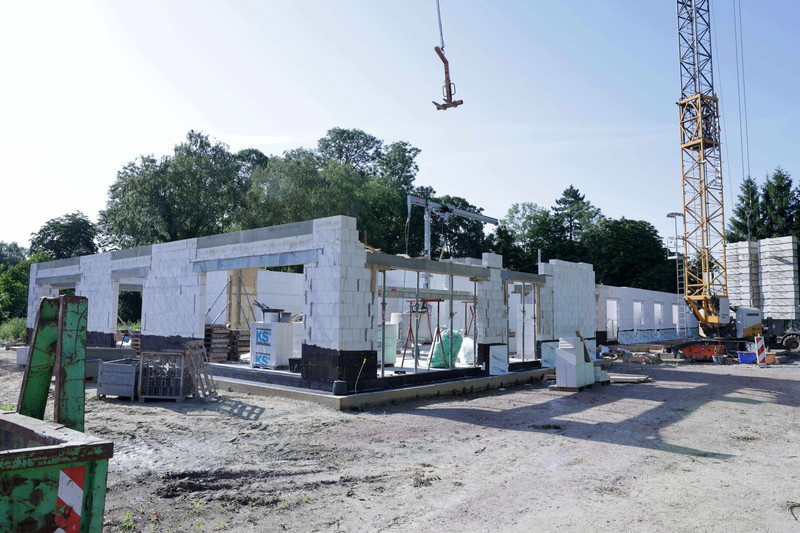
In the middle of the village, just a few steps behind the workshops, a construction crane towers into the sky. This is where the community’s latest project is taking shape: inclusive housing for seniors. “Originally, we only wanted to build for ourselves,” explains Ilka Morr, executive director of the foundation. “But of course, there are also many older people in the village who would like to stay in their familiar surroundings.” Together with local stakeholders, they developed a concept for a building where people with and without care needs can live under one roof and decide for themselves how much community interaction they seek—a pilot project for which there are hardly any precedents. “Our society urgently needs good models for how we can meaningfully shape inclusive coexistence, even in old age,” says SAGST project manager Lars Matschke with conviction. “Having already supported selected projects such as social farming in previous years, we are very pleased to support this forward-looking new construction at the Ovelgönner Mühle.”
Growing Old Together
The ground floor will house eight barrier-free apartments for residents of the community; on the first and second floors, the Wesermarsch Housing Association (WBW) is constructing additional apartments. Also planned at ground level is an inclusive community-run daycare center, as well as a spacious community room that will be open to anyone interested—including all residents as well as local clubs—for activities ranging from intergenerational breakfasts to yoga classes.
For WBW Managing Director Regina Neuke, this versatility is what makes the project so special. “A prerequisite for this is the willingness of everyone involved to accept unusual behaviors and to live together with mutual consideration and tolerance,” she emphasizes. Added to this are the exceptionally good local amenities: “Services like the lunch menu at the hotel or the grocery store with a delivery service are something special for a village of this size,” she notes from her experience.